
0.6mm Nylon Coated Wire

—— Providing stable material solutions for automated binding production lines

To address wire jamming, forming cracks, and batch-to-batch variations in automated stationery production, our 0.6mm Nylon-Coated Wire features ±0.01mm tolerance control and optimized bending performance design. This helps factories reduce downtime, lower scrap rates, and achieve long-term stable supply.

0.6mm Nylon Coated Wire – Engineering Specifications
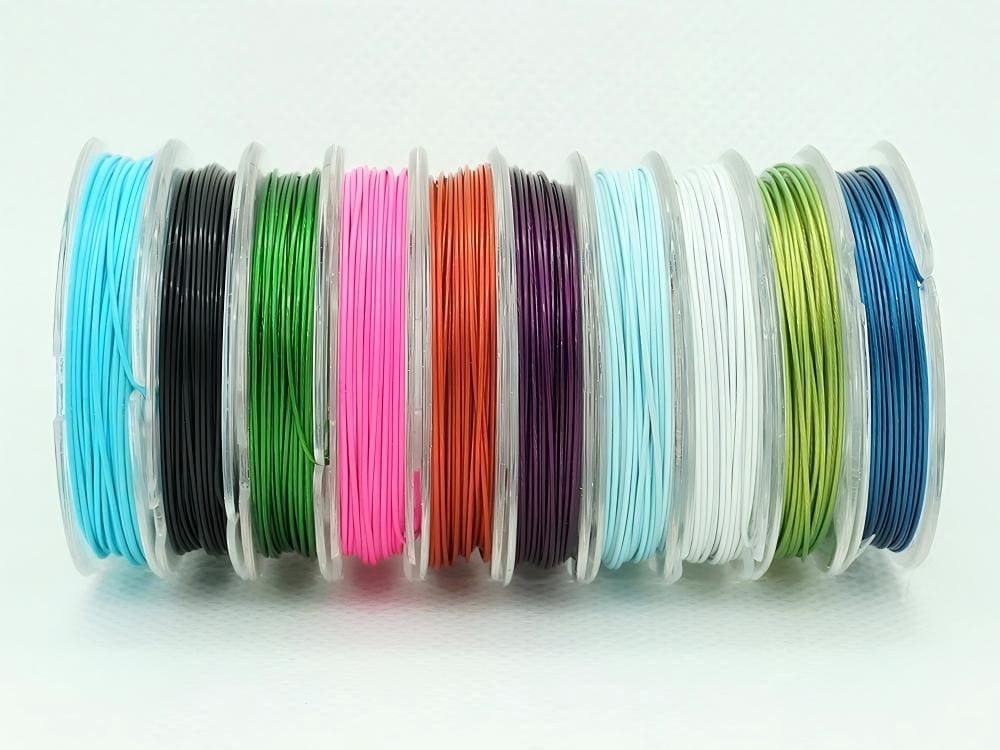
ParameterSpecificationProduction Relevance
Overall Diameter0.60 mmSuitable for medium-size binding and forming applications
Diameter Tolerance±0.01 mm (±0.02 mm optional)Reduces machine jamming and minimizes downtime in automatic forming lines
Core MaterialLow Carbon SteelProvides balanced strength and flexibility for stable forming
Tensile Strength600–800 MPa (adjustable)Optimized range for automatic twin wire and spiral forming
Elongation≥ 8%Improves bending performance and reduces coating cracking risk
Coating TypeExtruded Nylon CoatingEnsures uniform thickness and surface consistency
Coating AdhesionNo cracking at 180° bendingPrevents steel exposure during forming
Surface FinishSmooth and UniformReduces mold wear and feeding resistance
StraightnessHigh straightness controlEnsures stable feeding in spiral binding production
Color ConsistencyControlled batch color variationCritical for colorful paperclips and premium stationery
Packaging TypeSpool / CoilCompatible with different automatic feeding systems

What is 0.6mm Nylon Coated Wire?

0.6mm Nylon-Coated Wire is a precision wire featuring low-carbon steel wire as its core material, uniformly coated with nylon through an extrusion process, with a finished total diameter controlled at 0.60mm. This specification is widely used in Twin Ring binding, Spiral Binding coil production, and colored metal paperclip manufacturing, serving as a key foundational material in automated stationery production.

Compared to standard bare steel wire, the nylon coating provides superior surface protection and aesthetic appeal. It also reduces direct friction between metal and molds during forming, minimizing mold wear and feed resistance while enhancing the stability of automated equipment operation.

From an engineering perspective, the 0.6mm specification is generally considered the optimal balance between strength and flexibility:

  • Compared to 0.5mm: Offers higher structural strength and more stable retention force after forming
  • Compared to 0.7mm, it exhibits lower bending resistance and smoother forming
  • Suitable for medium-sized notebooks and binding structures

Thus, 0.6mm Nylon Coated Wire is not merely “colored steel wire,” but an industrial material engineered for optimized mechanical and forming properties. Its consistent quality directly impacts stationery production line downtime rates, finished product yield, and visual uniformity.
What is 0.6mm Nylon Coated Wire
Application Scenarios of 0.6mm Nylon Coated Wire

0.6mm Nylon-Coated Wire is primarily used in automated forming production lines within the stationery industry. This specification strikes a balance between strength and flexibility, making it suitable for medium-sized binding structures and the production of colored metal products.

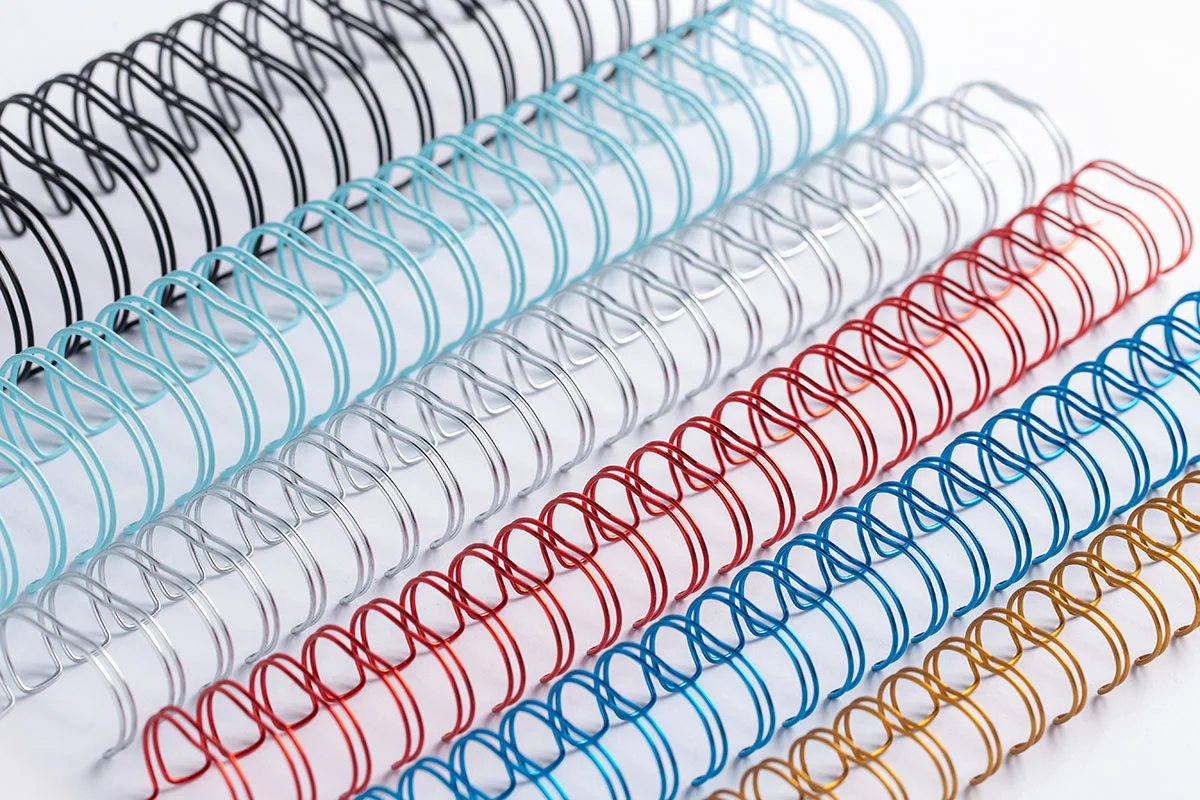
Nylon Coated Wire for Twin Ring Wire Applications
Twin Ring Binding Manufacturing

The Twin Ring production line is highly sensitive to wire diameter tolerances and bending performance.

Common pain points:

  • Wire jamming in automatic forming machines
  • Bending bursts or exposed steel
  • Loose structure after forming
  • Machine recalibration required after batch changes

Advantages of the 0.6mm Specification:

  • ±0.01mm tolerance control reduces jamming probability
  • Optimized balance of strength and elongation prevents cracking during continuous bending
  • Enhanced post-forming retention ensures structural stability

For medium-sized notebooks and desk calendars, the 0.6mm specification typically achieves an optimal balance between forming smoothness and structural integrity.

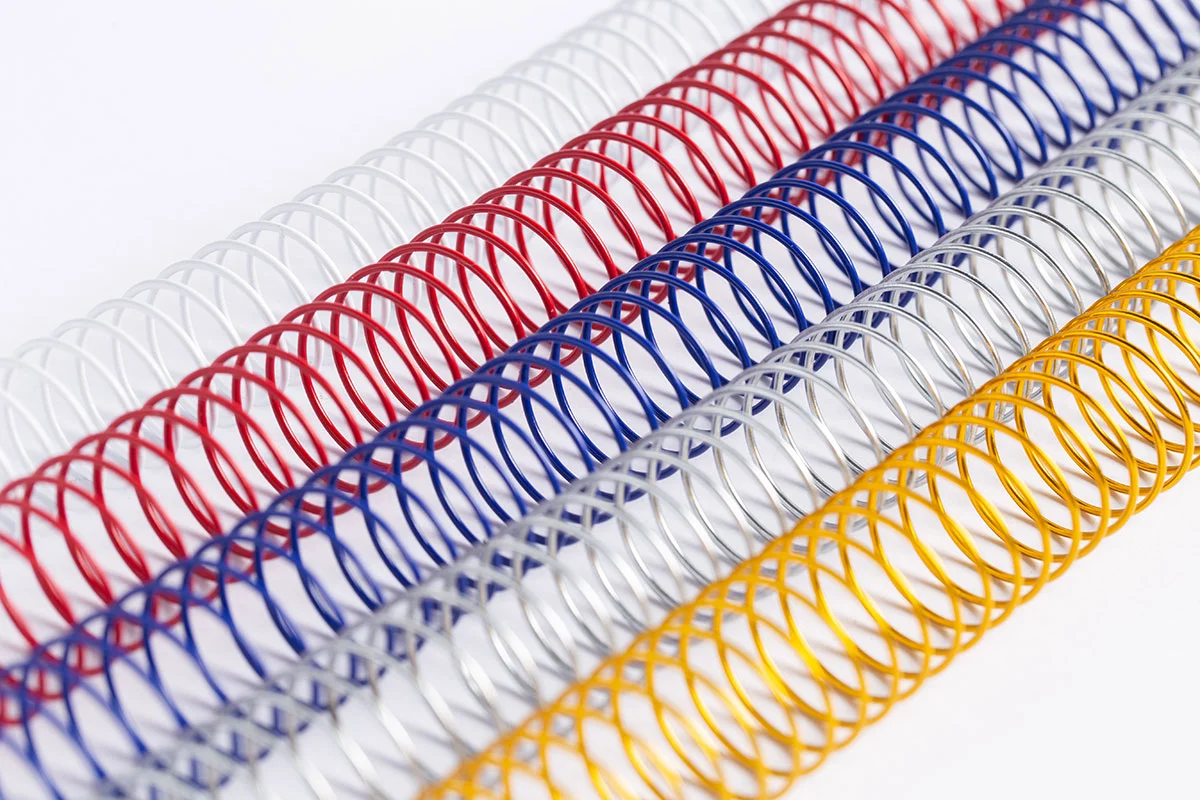
Spiral Binding Wire
Spiral Binding Wire Production

Spiral production involves continuous winding structures, demanding high precision in straightness and springback control.

Common challenges:

  • Feed vibration
  • Uneven pitch
  • Excessive forming springback
  • Batch-to-batch performance variation

Advantages of 0.6mm wire:

  • High straightness control ensures stable feeding
  • Moderate tensile strength minimizes springback impact
  • Uniform coating reduces mold friction and wear

In automated winding equipment, wire consistency directly impacts production efficiency and finished product dimensional accuracy.

Colorful Metal Paperclips
Colorful Metal Paperclips Manufacturing

Paperclip production places greater emphasis on surface quality and coating adhesion.

Common pain points:

  • Coating cracking after molding
  • Noticeable color variation between batches
  • Surface particles or bubbles
  • Paint peeling during use

Advantages of 0.6mm coating:

  • Strong nylon coating adhesion withstands 180° bending without cracking
  • Consistent batch color stability, ideal for export-grade stationery
  • Smooth, uniform surface enhances visual quality

For manufacturers serving retail chains or branded clients, visual consistency directly impacts market reception.

Advantages

Why 0.6mm Diameter Matters?

The core reason behind the significance of 0.6mm diameter lies not in a simple choice between “thicker” or “thinner,” but in striking an engineering balance between structural strength, forming ease, equipment load, and cost.

For manufacturers of Twin Ring, Spiral, and colored paper clips, selecting the 0.6mm specification means achieving a more optimal match between stable production and structural performance.

Balance of Strength and Formability

0.6mm achieves an optimal balance between structural strength and bending flexibility. It offers greater stability than 0.5mm while being easier to form than 0.7mm, making it suitable for medium-sized binding structures.

Reduced Risk of Machine Downtime

Moderate wire diameter minimizes forming resistance and equipment load. With well-controlled tolerances, it helps decrease jamming incidents and adjustment frequency.

Enhanced Springback Stability and Dimensional Control

In Spiral and Twin Ring production, 0.6mm wire helps stabilize springback fluctuations, improving forming consistency and visual precision.

Optimal Balance of Cost and Performance

It strikes a favorable overall cost range between material consumption, equipment energy usage, and structural stability, making it suitable for long-term, large-scale production.

FAQs – 0.6mm Nylon Coated Wire

What is your guaranteed diameter tolerance for 0.6mm?

If you use automatic Twin Ring or Spiral forming machines, diameter stability is critical.

We typically achieve ±0.01mm control (industry standard is ±0.02mm).
Consistent tolerance control helps minimize feeding jams, mold wear, and frequent machine adjustments.

If your equipment requires tighter tolerances, please inform us in advance. We can tailor our control standards to match your equipment specifications.

If you encounter cracking or steel core exposure at bend points during production, this is typically related to coating adhesion and steel core elongation.

Our 0.6mm specification is engineered to balance strength and elongation, validated through bending tests to ensure no cracking occurs under 180° bending conditions.

For products requiring sharper bends or special structural designs, we can provide samples for customized testing.

If you’ve encountered situations where “the first batch works fine, but the second batch requires recalibration,” this is typically due to variations in batch mechanical properties or diameter fluctuations.

The 0.6mm specification is particularly sensitive to automatic forming equipment. Therefore, we control the following during production:

– Diameter consistency
– Tensile strength range
– Coating thickness uniformity

Stable batch control can help you minimize repetitive recalibration time.

If you produce colored paper clips or export stationery, color variations may impact end-user feedback.

We implement batch management for nylon raw materials and control color mixing ratios during production.
You may also provide color swatches or samples for matching.

For premium stationery brands, color consistency control is particularly critical.

If you’re concerned about insufficient strength or forming difficulties:

  • 0.5mm is easier to form but has lower structural strength
  • 0.7mm is stronger but places higher demands on equipment
  • 0.6mm strikes a balance between strength and forming ease

It’s typically suitable for medium-sized binding products, offering a versatile and stable specification.

If your equipment is particularly sensitive to rebound or strength, we can adjust the following parameters based on your application scenario:

This is contingent upon your providing the usage scenario or test feedback. For more detailed information, please refer to this page —— “Custom Nylon Coating Thickness For Nylon Coated Wire”.