
Blog
Spiral Binding vs Wire Binding

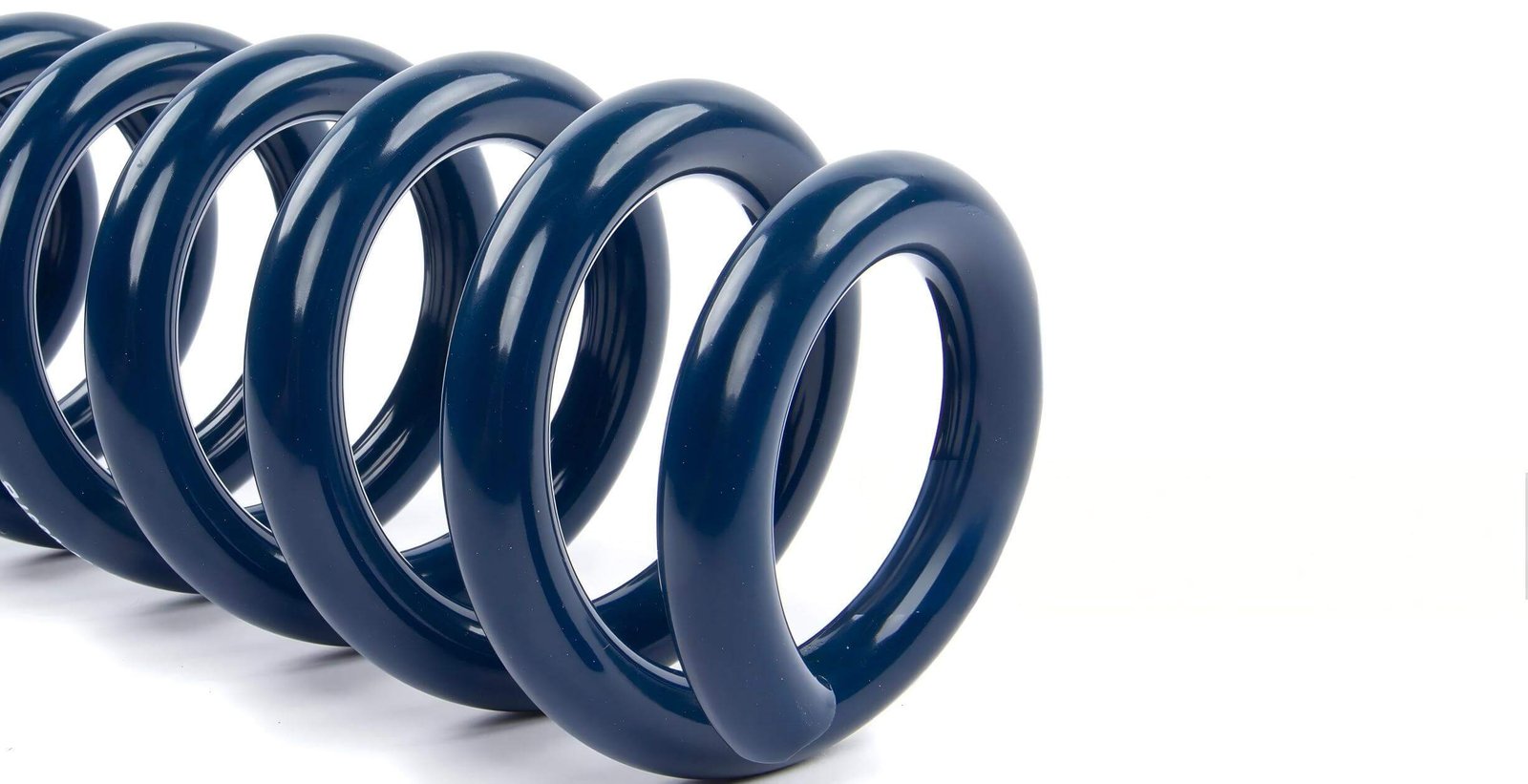
Spiral binding and wire binding are two of the most popular book binding methods used in notebooks, planners, calendars, and office documents. Spiral binding uses a continuous plastic or metal coil, while wire binding uses double loop wire for a more professional and durable appearance. Each binding method offers different advantages depending on application, durability, appearance, and budget.
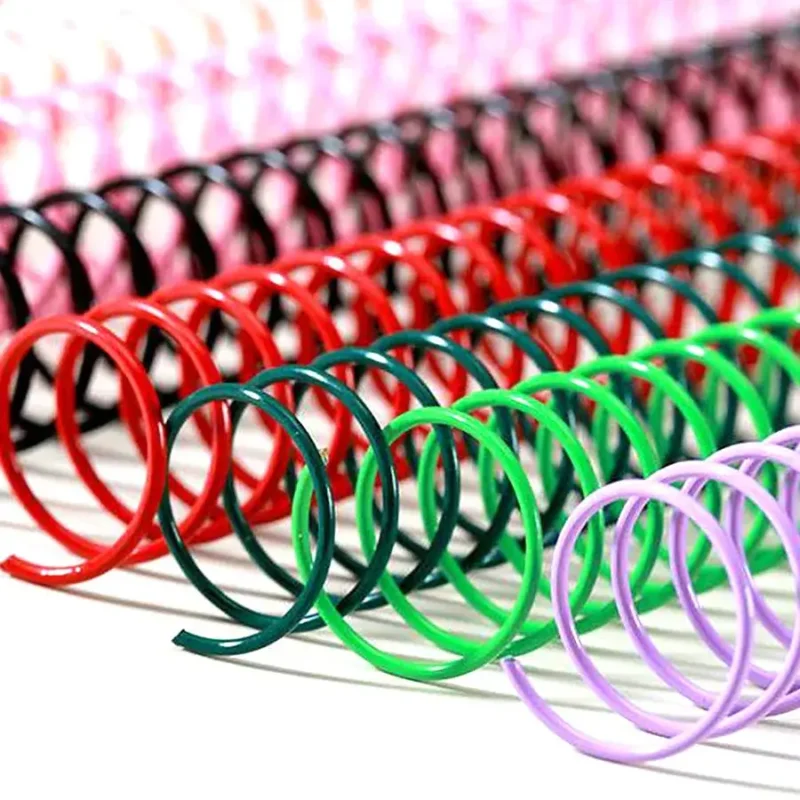
What is Spiral Binding?
Spiral binding is a very common bookbinding method that uses a continuous plastic or metal spiral coil to hold punched sheets of paper together. Because the coil forms a continuous spiral structure, the book can be opened 360 degrees and lies completely flat, making it more convenient to use.
Spiral binding is widely used in:
- Student notebooks
- Training materials
- Manuals
- Calendars
- Office supplies
Common materials for spiral binding include plastic coils and metal spiral wire. Plastic spiral binding is lighter in weight, while metal spiral binding offers greater structural strength.
Compared to Wire-O Binding, Spiral Binding has a simpler structure and lower cost, making it widely used in student stationery and general office products. However, in the high-end notebook and premium stationery markets, an increasing number of brands are opting for Wire-O binding solutions, which offer a more sophisticated appearance and greater structural stability.
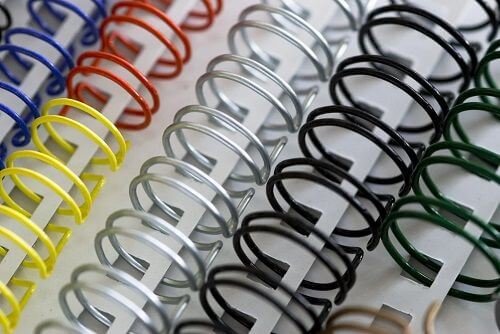
What is Wire Binding?
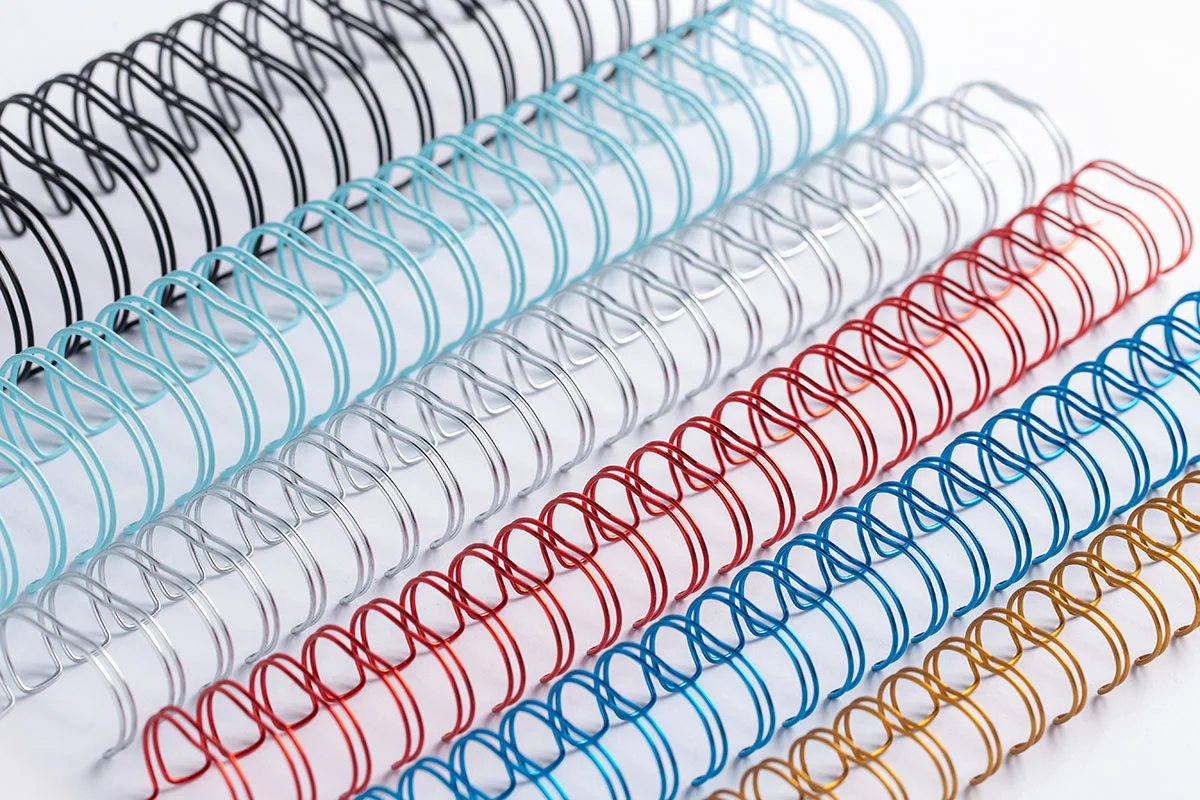
Wire binding is a binding method that uses a double metal coil to hold pages together; it is also known as Wire-O binding or double-loop wire binding. It involves punching holes along the edges of the pages and threading a metal wire through them to create a sturdy binding structure.
The key features of wire binding are:
- Supports 360° page turning
- Books can lie completely flat
- Smoother page turning
- More robust structure
- A more professional and premium appearance
Compared to Spiral Binding, Wire Binding offers greater durability and a more premium aesthetic, making it better suited for the premium stationery and business stationery markets.
Currently, high-quality wire binding uses nylon-coated wire as the core material. Compared to standard metal wire, nylon-coated wire offers:
- Better rust resistance
- A smoother surface
- More consistent forming results
- A wider range of color options
This further enhances the overall quality of notebooks and calendars.
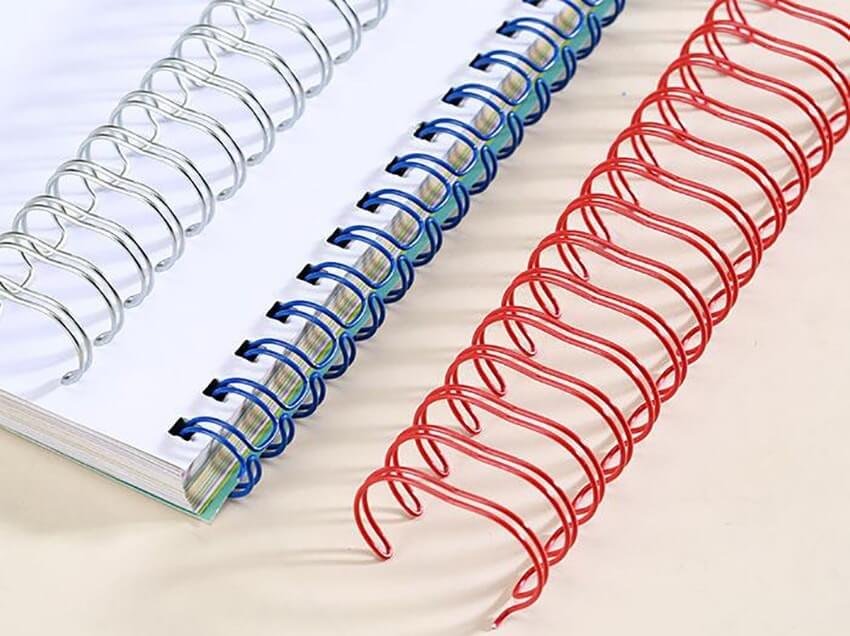
Key Differences Between Spiral Binding and Wire Binding
Spiral binding and wire binding are both very common binding methods in the stationery industry. They both allow for 360-degree page turning and are widely used in notebooks, calendars, and office documents. However, there are distinct differences between the two in terms of structure, appearance, durability, and applications.
Below are the main differences between spiral binding and wire binding.
| Item | Spiral Binding | Wire Binding |
| Structure | Continuous spiral coil | Double loop wire |
| Material | Plastic or metal spiral | Metal double loop wire |
| Appearance | Simple and casual | More professional and premium |
| Durability | Good flexibility | Higher structural stability |
| Page Turning | Smooth | Smoother and flatter |
| Cost | Lower | Higher |
| Common Applications | School notebooks, training books | Premium notebooks, planners, calendars |
| Custom Color Options | Limited | More premium color options with Nylon Coated Wire |
Which One Is Better?
In reality, there is no definitive “better” option between spiral binding and wire binding; it all comes down to product positioning.
- If cost and lightweight design are priorities → Spiral Binding
- If appearance and a premium feel are priorities → Wire Binding
Currently, an increasing number of high-end stationery brands are opting for nylon-coated wire binding solutions to enhance the overall quality of their notebooks and calendars.
As a professional manufacturer of nylon-coated wire and supplier of binding materials, Sincerity Binding specializes in providing high-quality wire binding material solutions to the global stationery industry.
Advantages of Spiral Binding
The key feature of spiral binding is that it allows for 360-degree page turning, enabling the book to lie completely flat, which makes it more convenient to use and write in.
Compared to other binding methods, Spiral Binding offers the advantages of lower cost, lighter weight, and excellent flexibility, making it ideal for high-volume production. Additionally, different coil diameters can be selected based on page count, making it suitable for both thin and thick books. Due to its simple structure and high production efficiency, Spiral Binding is widely used in student stationery and general office products.
Advantages of Wire Binding
Compared to spiral binding, wire binding typically offers greater structural stability and a more sophisticated appearance.
One of the key advantages of wire binding is that it allows for 360-degree page turning, enabling the book to lie completely flat and turn pages more smoothly—making it ideal for products that require frequent writing and reading. Additionally, the double-coil structure is more robust, less prone to deformation or page separation, and well-suited for high-page-count notebooks and stationery products intended for long-term use.
Furthermore, high-quality wire binding typically uses nylon-coated wire as the core material. Compared to standard metal wire, nylon-coated wire offers superior rust resistance, a smoother surface, and a wider range of color options, which can further enhance the overall quality and durability of notebooks and calendars.
Common Applications of Spiral and Wire Binding
Both spiral binding and wire binding are widely used in stationery and office products, but due to differences in structure and appearance, they are suited for different types of products.
Because of its lower cost, light weight, and flexibility, spiral binding is more commonly used for:
- Student notebooks
- Training materials
- Workbooks
- General office stationery
- Study guides
It is better suited for mass-produced items and everyday use.
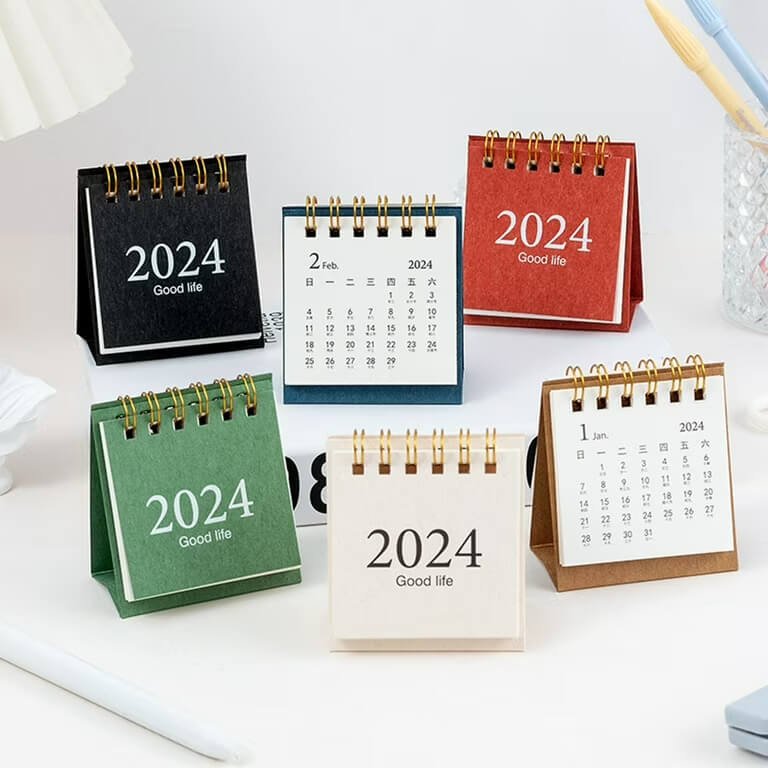
In contrast, wire binding offers a more sophisticated appearance and a more stable structure, making it more commonly used for:
- Premium notebooks
- Planners
- Calendars
- Product catalogs
- Office presentation books
Particularly in the high-end stationery market, an increasing number of brands are adopting wire binding solutions using nylon-coated wire to enhance the visual quality, rust resistance, and page-turning experience of notebooks and calendars.
Spiral Binding Materials vs Wire Binding Materials
Spiral binding materials and wire binding materials differ significantly in terms of material, structure, appearance, and applications. The type of binding material used directly affects a book’s durability, page-turning experience, and overall product positioning.
Below are the main differences between the two types of binding materials:
| Item | Spiral Binding Materials | Wire Binding Materials |
|---|---|---|
| Main Material | Plastic coil / spiral wire | Double loop wire / Nylon coated wire |
| Appearance | Simple and practical | Premium and professional |
| Durability | Good flexibility | Higher structural stability |
| Cost | Lower | Higher |
| Common Applications | School notebooks, manuals | Premium notebooks, planners, calendars |
| Surface Finish | Basic | Smoother and more refined |
As the high-end stationery market continues to grow, an increasing number of brands are opting for nylon-coated wire binding solutions to enhance product aesthetics, improve the page-turning experience, and ensure long-term durability.
How to Choose the Right Binding Method for Your Project?
You should choose a binding method based on your product positioning, intended use, and budget. Different binding methods directly affect the appearance, page-turning experience, and durability of notebooks, calendars, or office documents.
Select Spiral Binding
If your project prioritizes:
- Cost control
- Lightweight design
- High-volume production
then Spiral Binding is the more suitable choice. Widely used in student stationery, training materials, and general office products, it offers low cost, good flexibility, and high production efficiency.
Select Wire Binding
If your project prioritizes:
- Premium aesthetics
- Long-term durability
- Smoother page-turning experience
- Professional presentation
then Wire Binding is a better fit. In particular, Wire Binding solutions using Nylon Coated Wire not only offer superior rust resistance and structural stability but also enhance the overall premium feel of notebooks and calendars.
FAQ About Spiral Binding and Wire Binding
Which is better for notebooks?
For standard student notebooks or training materials, spiral binding is a better choice because it is more cost-effective.
For premium notebooks, planners, or business stationery, wire binding is a better choice.
Which binding method is better for calendars?
For the Calendar product, we recommend using wire binding, particularly double-loop wire made of nylon-coated wire, as it is more durable and less prone to warping over time.
Why Choose Sincerity Binding?
As a professional manufacturer of nylon-coated wire and supplier of binding materials, Sincerity Binding specializes in the production and supply of high-quality spiral and wire binding materials, providing the global stationery industry with reliable and durable binding solutions.


